Monday, November 10, 2025

The Crown - How Netflix Is Making Us Root For The Colonist!


To say The Crown on Netflix is engaging is quite an understatement. It is a wonderfully crafted piece of art that takes us into the corridors of palaces and the lives of people who, otherwise, would be almost invisible to us. Although the lives of the British royal family have been well-documented over the last few decades, especially during the era of Princess Diana, this historical drama does an excellent job of humanizing members of the British royal family. It makes us empathize with them. As a viewer, you wonder what you would do facing similar circumstances? How would you deal with the news of your father's passing when you also knew he was a chain smoker throughout his life? One feels sympathy for the royals, knowing they also go through mundane life events like birth, death, heartbreak, jealousy, and the whole gamut of life's experiences in between. For any writer, actor, director, or show/movie creator, isn't that the pinnacle of success?


Obviously, the show is based on real events and on real characters. The events these royals faced, as portrayed in the episodes, are mundane. The love of Prince Charles for Camilla, for example. Or, Phillip being a harsh father to his son, or the Queen's sister feeling overshadowed (or useless!). Or the newest daughter-in-law blazing brighter than all the current and previous royals combined, or the sons and daughters going through divorces and then finding new partners. These are all common problems. I am not trying to take away the intensity of sorrow felt after deaths, or the jealousy felt after being sidelined, or feeling underappreciated after being overlooked. These are genuine human emotions, and whether you live on the edge of financial ruin or are a Queen with hundreds of servants at your disposal, the everyday travails of existence are shared by everyone. But as great a show as it was, it is nothing but a masterpiece of emotional manipulation that somehow transforms war enablers and colonial beneficiaries into tragic figures, it is a fantasy that the showrunners are selling that the family that once ruled quarter of humanity by unleashing violence of massive proportion and extraction, is at heart just like us, with lots of Rolls Royces's.


To say the history of current British royals is as sordid would be an understatement. I am referring to historical events or personalities that are well-documented and widely known. I am sure there is a lot more - 1/7th of the iceberg, that is still hidden from public records. There is fraud and deceit at multiple levels. The forefathers of the current dynasty ruled over the largest empire in human history. Though their names (Queen Victoria, especially!) are still stuck on a variety of locations or monuments across the world, somehow they (Queen Victoria, again!) get a pass for the horrific crimes her empire unleashed on the world. Be it the genocidal frenzy against the local black population of Africa or the 'Winston'-made (Churchill, that is!) famine killing millions in Bengal under the 'motherly' watch of the King. The royals were always kept above this 'empire' crimes as if they were the innocent, blameless child of it, while happily displaying the Kohinoor in their tiara.


Then at the family level, the current King's grand-uncle, Edward VIII, himself a king for barely a year, was a NAZI enthusiast. However, we are to believe that Edward was the only and literally, the only person from that family who was a NAZI sympathizer? Did he grow up in a vacuum, away from the family? The other royals may not be NAZIs, but they all were a Grade A racist and eugenicist lot for sure. There is a great scene in The Crown where Queen Elizabeth is aghast to find out that her Uncle, Edward VIII, not only abdicated but then actively worked towards NAZI goals. The acting and script in that particular sequence are top-notch. Still, one has to wonder how she would need her secretary to inform her about her Uncle's activities. I mean, the said Uncle wasn't much of a clandestine person anyway.


And then we have a fraud narrative at the individual level. The royals are nothing but the personality created and delivered to us to make the subjects fond of them and proud of them. The travails and difficulties these royals faced are dramatized in movies for our entertainment. And we do consume it rather voraciously. Some of these movies are truly outstanding. The movie The King's Speech was an excellent movie with impeccable acting and a script worthy of an Oscar. But if we look a bit deeper into the narrative, a second in line for the Crown was dealing with stuttering and panic/anxiety attacks throughout his life. And then, to make matters worse, he was thrust into the kingship. So, we are to applaud his most significant achievement during his - King George VI's, tenure: giving speeches to his war-torn nation without stuttering. I know critics will point out that the King refused to evacuate London during German bombing. Tens of millions of people were killed during World War II, and tens of millions more died fighting the war, and the King of a country ruling half of the world was fighting to overcome his stuttering and staying put in his plush palace? Does that make sense? It's a travesty!


Even Queen Elizabeth herself had never had to make any serious, accountable decisions beyond those affecting her family. The British royals have been reduced merely to 'Stamps' for centuries now. Any individual without accountability and goals is worthless. The case in point was the Queen herself. Her long tenure also cannot, in strictest terms, be celebrated since it's God who gave her a long life. She could have made a significant impact had she retired at a logical age and allowed her son to take over and 'rule' for a meaningful period. 


Similarly, the life of Princess Diana is celebrated as if she should be an inspiration to young women. I am sorry, but what was special about her? She came from the aristocracy and married up, an aspiration and common practice among the British aristocracy. Her marriage wasn't happy, and she eventually divorced. She had multiple affairs between her divorce proceedings and her sad demise. After her separation from Charles, Diana associated herself with various worthy causes and provided photo opportunities. She even hugged an AIDS child. In short, she attempted to empathize with and humanize the masses that her family, both aristocratic and royal, had mercilessly exploited for centuries. Is that it? So, we bring the bar almost to the ground so we can celebrate Dinae. She was an OG of modern-day 'influencer', mostly worthless but still very popular. We can credit Diana for playing her role in nurturing absolutely toxic and corrosive 'tabloid' journalism.


But the show must go on. Somehow, the government of Great Britain sees a need to maintain the Royals, who at this point are nothing but unaccountable aristocrats stumbling from scandal to scandal. The British populace also overwhelmingly supports the monarchy. We feel bad when the Queen weeps over her corgis while her empire actively tries to dehumanize black Africans in their own country. We are to applaud the King for overcoming stuttering while his empire purposefully starved millions to death by diverting food away from the famine. And the historical drama may be pretty entertaining and engaging, but it is nothing but the longest-running propaganda campaign delivered to us in 4K. The real Crown isn't made of diamonds but of denials. 

Monday, October 27, 2025

Happy Birthday, Modi ji!

(All rights of the image are with pngtree.com) 

India's Prime Minister, Mr. Narendra Modi, recently achieved two milestones. First, he turned 75 (Happy birthday, sir!), and second, he completed 25 years either as a Chief Minister or a Prime Minister. Turning 75 healthy is an achievement worth celebrating. Despite severe pressure from various quarters, Modi ji is still cruising comfortably. But his turning 75 is not ordinary, and I am not talking about his achievements as a Chief Minister or as a Prime Minister. He has been an RSS Swayamsevak and then a full-time Pracharak for almost 60 years. He has truly risen from the ground up. Modi ji has travelled across India like very few people in recent times. He has seen society very closely.  He has tirelessly worked to improve the lives of the masses as a Pracharak. And when needed, picked up critical issues like hoisting the Indian Tricolor in the Lal Chowk in Srinagar. Given the current situation in Kashmir, the young generation may find it hard to believe that in the 1980s it was virtually impossible even to hoist India's flag in Kashmir. Taking that as a challenge, he worked closely under the leadership of senior BJP leader Mr. Murali Manohar Joshi to march towards Srinagar and hoist the tricolor. This sort of courage comes from conviction and belief in ideology, as well as from putting ideology above self-interest. 

His tenure in administration is also impressive. Apart from Mr. Nehru, Mr. Modi is the only Prime Minister to be elected to the office for three consecutive terms. He is also the only non-Congress Prime Minister to have been elected twice with an absolute majority. Currently, he is the third-longest-serving Prime Minister in India; by the time he completes his current five-year term, he will be the second-longest-serving Prime Minister.

The Gandhi family held the position of Prime Minister for such an extended period that many would have thought it impossible for anyone outside their family to reach such political milestones. However, when in power, Mr. Modi is no stranger to achieving significant milestones; he was the longest-serving Chief Minister of Gujarat. 

These accomplishments are remarkable, especially when we consider the size and complexity of India and its electoral politics.

Mr. Modi's leadership over the last 11 years, along with the subsequent 4 years, will be remembered for much more than just electoral successes. His influence on India's politics, economy, foreign policy, policymaking, Lok Sabha dynamics, and party politics is so significant that it may take several decades for people to fully grasp the extent of his impact. The only other politician who comes close to this level of influence is Mrs. Indira Gandhi. However, unlike Mr. Modi, Mrs. Gandhi's tenure was marked by widespread corruption in governance, economic difficulties, highly personalized politics, and divisiveness, resulting in adverse economic and social outcomes for India.

We have at least another 4 years of Modi government. His political party has grown strong, but India votes for larger-than-life personalities, and the BJP currently has none after Modi ji. The elections of 2029 will be dramatic. Though the good work in governance, infrastructure development, and international relations continues in the third Modi term, the hubris is setting in. There seems to be inertia to interacting with people. Lack of any credible voice beyond Modi ji will prove to be a formidable electoral problem for BJP in the near future. But that's in the future. We can and should celebrate Modi ji's achievements in present. 

Happy birthday, Modi ji! 


Wednesday, August 20, 2025

Ye "Vote Chori" kya hai...ye "Vote Chori"?


The latest rabble-rousing controversy from Rahul Gandhi is far more nefarious than it may seem. The general modus operandi of his is quite a pattern. Wake up before any election, start a controversy, talk haughtily in front of cameras, and post election results, which tend to go against him and his party, and vanish to some foreign land for a vacation. He has been repeating this since the year 2014. Rahul and his party did get success time to time, but overall, he and his party have failed to meet the standards of a good opposition party. They failed to raise the valid issues or the concerns people are facing. Moreover, they failed to come up with or provide sensible solutions to the problems, to counter the government. However, the key difference this time is that Rahul Gandhi is not targeting the government or Mr. Modi ji or the BJP. Instead, he is aiming for the Election Commission of India, an impartial governmental institution that has been holding elections, large or small, successfully for more than 70 years. A few plays are unfolding here. However, they all point in one direction  - Is Rahul Gandhi acting on someone's behalf? 

1) Issues raised - Rahul Gandhi provided data on a variety of seats that Congress or his allies lost (along with, as far as I know, one seat that Congress won) and claimed that fake voters. Rahul Gandhi launched his latest attack after the Election Commission of India (ECI) conducted a door-to-door review and verification of voters in Bihar, discovering that nearly 6.5 million voter names should be deleted. As a Leader of the Opposition and head of a national party, he has a variety of options to question the voter deletion exercise. The exercise ECI conducted, in itself, is constitutional and valid. But Rahul Gandhi and his Congress party can challenge the findings in the Supreme Court. Or can they request an official meeting with the ECI to point out the mistakes? ECI may have made a mistake, and they can make amends. Instead of any of that, Rahul Gandhi decided to hit the streets? Classic shoot and scoot! We can make a logical argument that Rahul Gandhi and the Congress party are attempting to garner public attention and sway the voters through this controversy. That brings us to the second point. 

2) Is the Congress party a player in Bihar? - The answer, so far, is no. The party is on the fringe for the most extended period. The party has been a junior member of Lalu Prasad Yadav's RJD for longer than that. The last time Congress won the election in Bihar was in 1985. Since then, they have been on a decline. Their best performance in the last 25 years was in the year 2000 when they won 29 seats. This time's elections do not paint much of a rosy picture for the party either. Even if they win more seats than the last time, it is likely to be because of RJD. Instead of raising grassroots-level workers in Bihar, Rahul Gandhi is out talking about an issue that is unlikely to resonate with the ordinary voters in Bihar. The other so-called frauds that Rahul Gandhi insinuated are in the states that do not have any elections due anytime soon. In short, this controversy will not give any gains to Rahul Gandhi or the Congress party. Then why do it?

3) Some nefarious design? -  No one can say Rahul Gandhi doesn't travel. He travels all the time and everywhere, especially to foreign lands after his election defeats. After every major electoral defeat, he heads to some Western nation or a university in some Western country and then criticizes India. He badmouths the current government, he badmouths the policies of the Indian government, and as if that is not enough, he badmouths India. The democracy is in danger, secularism is in danger, minorities are in danger, everyone is in danger, and the only hope is himself and his party. The obvious question is, why does he do that? Speaking about India or the policies of the Indian government in foreign countries does not bring him any votes at best. The educated class in India may get alienated by this behavior. There are enough enemies of India, inside and outside, the so-called ".5" front that would not like to see India progressing and getting stronger. Rahul Gandhi pitched a harsh battle against India acquiring fighter jets. He never speaks about increasing infrastructure in India, and the only thing he proposes is more and more reservations. After questioning the government, which he is allowed to do to an extent, he is after democratic government institutions. Why? It is not wrong to wonder if Rahul Gandhi is doing this on someone's behalf? Because otherwise none of his doings make any sense. While the things he is attempting to do are all quite dangerous to India. 

By the time I finish this blog, the voters-related controversy was nose-diving to its demise. The agency that provided the data to Rahul Gandhi was backing out of all the claims. The so-called influencer who howled in unison with Rahul Gandhi is quietly taking down their videos. The newspapers and the news websites are no longer showing this as a headline. However, the awful, pukish aftertaste of Rahul Gandhi's tirade will continue for some more time. 


Monday, July 07, 2025

When the False Bravado Meet B-2s!


I started writing this blog when there was a fear of a potential nuclear specter during the Iran-Israel conflict. By the time I finished a couple of paragraphs, the conflict was over. It was disappointing. Did the attack destroy Iran's nuclear facility? Did it teach a lesson to Iran's Islamic regime? We may never know. 

Iran's Islamic theocracy has been trying to position itself as the voice of all Muslims across the world. They have been supporting a variety of terrorist organizations, especially against Israel. The Iranian regime has been openly advocating war against Israel and the US. War with these two nations has been a central tenet of Iran's Islamic theocracy for decades. The simple probability will tell you that if Iran keeps daring Israel or the US to attack, the attack will happen at some point in time. 

The world does not need another war. But it is hard to dodge the inevitable. The military strikes may not lead to nuclear defanging of Iran. My point is, Iran has been inviting bulls to their china shop. 

The attack on Iran was a foregone conclusion after the gruesome Oct 7th attack on Israel. It took longer since Israel created a checklist, and Iran's name was towards the end, if not the last. Israel has been checking off names for a while now. Israel's initial targets were Iranian proxies. First, they almost (for now) annihilated Hamas, then they systematically dismantled Hezbollah. During all this, Israel worked with the US in getting rid of the Assad family from Syria and also liberating Lebanon from a Syrian stronghold. During the last hours of Assad's rule in Syria, Iranian military and intelligence assets in Syria packed their bags and left in haste before the 'rebels' deposed the Assad regime. Iran, now, does not have any assets left in and around Israel. It will not be surprising if Israel takes over parts of Gaza and makes it an Israeli territory. Iran has been assiduously building their network around Israel for decades and has spent billions of dollars in doing so. And all that was dismantled in a couple of years! Perhaps, we give too much credit to the Ayatollahs of Iran. They are not that smart! 

Just like Pakistan, Iran will not lie low for long. These Islamic regimes and the ideology survive on confrontation. It thrives on having enemies, even if they are imaginary. Iran is lucky that Israel is not going anywhere. So, the Iranian theocracy can continue with its animosity. But for the rational observers of international affairs, it was fun to watch the Ayatollah's false bravado and war mongering slapped into sense by a couple of B-2s and a parked USS Nimitz! 

Thursday, June 05, 2025

Op Sindoor - What's Next?

Despite a somewhat confusing turn of events leading to India readily accepting a ceasefire request from Pakistan, the actions taken by India as part of Operation Sindoor may have far-reaching effects on the future of conflict with Pakistan. 

1) Counter Intelligence - For the last two Islamic terrorist attacks, India responded in different ways. For the first one, India sent special forces into Pakistan-occupied Kashmir to eliminate the perpetrators. And the second time, India dropped precision bombs on terrorist camps, removing scores of Islamic terrorists in one go. So, the response to barbaric killings of Hindus in Pahalgam had to be not just different but severely more punishing. And the punishment rained from the sky. Indian armed forces hit multiple locations simultaneously, showcasing superior air power and Israel-level ground intelligence. The armed forces knew where to attack and what they were targeting, allowing them to select precise ammunition. These two advantages show that Indian intelligence has an excellent network of deeply embedded assets within Pakistan and Islamic terrorist organizations. Now, Pakistan not only has to worry about its completely exposed defense and defensive infrastructure, but it will have a tough time trusting anyone within its carefully built Islamic terrorist asset network. 

2) "I will look for you, I will find you, and I will kill you" is a famous line from the action movie "Taken." The Indian attack strategy, in response to the Pahalgam attack, embodies the spirit of this dialogue. Indian political establishment finally crossed the mental barrier of 'jaane do' and decided to go for the kill. From now on, India's response to any Islamic terrorist attack from Pakistan will be unleashing violence. There will not be any equivocation in response. For the first time since the start of Islamic terrorism in India, i.e., since 1989 onwards, India has decided not only to respond but respond with a decidedly higher proportion. The operations will no longer be covert and time-bound. Instead, the response will be like an escalation matrix. The counter-response from Pakistan will be dealt with at a step higher intensity. The only way out for Pakistan will be a total defeat or a quick surrender. 

3) The Indus Water Treaty weapon - India has finally invoked this weapon after more than 60 years. India always played the role of a big brother and allowed water to flow unabated into Pakistan. India did not even take its share of water as per the agreement and even allowed that water to flow into Pakistan. I don't know why we tried to be so magnanimous. Pakistan wants to occupy not just Kashmir but also kill Hindus in India. Their state policies and strategic goal of Pakistan, especially since Zia-ul-Haq's reign in the 1980s, has been to destroy or dismantle India, come what may. Pakistan sees itself as a soldier of Islam and considers attacking Hindu India as its sacred duty. How do you deal with such delusion? Certainly not through any sensible dialogue or through any rational understanding. The message, then, must be delivered from a position of strength and might. And among many options, leveraging Indust water is essential. Almost 90% of Pakistan's agricultural land relies on the life-giving waters of the Indus River for irrigation. This vital water source is the backbone of the country's farming industry, nurturing the fields that feed the nation. When a river runs dry or overflows its banks, the consequences are immediate and far-reaching, affecting the lives of tens of millions of people. The ripple effects of such events can transform communities overnight, leaving people struggling to adapt to a new reality. The Pakistani junta immediately labeled India's suspension of the Indus Water Treaty as an 'act of war,' and rightfully so. And just like the conventional war they lost in 48 hours, the Pakitan quickly realized they could not win the 'water' war either. Perhaps thirst and hunger will bring some sense to them. Or maybe not! 

The consistent message from Indian political leaders and the Indian army is that they have established a red line. If Pakistan crosses that line, it will face severe consequences, including the destruction of its military resources and widespread starvation for millions. However, Pakistan will not stop its provocative behavior. They may remain quiet for a while until the situation calms down, but they are likely to revert to their old tactics soon enough. And when that happens, the real question is whether the Indian government and military will uphold the sanctity of the red line they have drawn.


Tuesday, May 13, 2025

Snatching defeat from the jaws of victory?

Was the recent brief conflict between India and Pakistan a lost opportunity for India to inflict lasting damage on Pakistan? The dust has not yet settled in Pakistan from all the body-blow bombings Pakistan received from the Indian Air Force. So, to assess the war's outcome is a bit of a dicey proposition. The Indian armed forces and the Government of India (GoI) have also clarified that any adventure, either militarily or through proxy actors, will be considered an act of war. In short, the military hostilities may resume at any moment. 

The Background:

After the brutal killings of innocent Hindu tourists in Kashmir, the GoI and Indian armed forces did not fall for a knee-jerk reaction. Instead, the armed forces and the government machinery started working in sync in shaping the response to the latest Islamic terrorist attack. The foreign ministry assiduously worked on foreign relations, while the armed forces must have put finishing touches on the plans to punish Pakistan. Not a single soul in India or abroad thought that these dastardly terrorist attacks would go unpunished. The buzz surrounding India's potential response sparked intense speculation: how robust would their retaliation be, and what goals would be accomplished through their attack? I feel the latter part of the question, where the wheels may have come off. 

The Response: 

Wow! The Indian armed forces unleashed a breathtaking display of power from the skies, a sight that left the Pakistanis in awe like never before! All three arms of the defence came together and unleashed the punishment. The technology was advanced, and so were the strategies. The escalatory steps were measured and precise. Initially, only the Islamic terrorist camps in Pakistani-occupied Kashmir and mainland Pakistan, spread across hundreds of kilometers, were hit virtually simultaneously with deadly precision by Indian firepower. Though Pakistanis will never confirm the exact number of deaths, hundreds of people, including some of the most dreaded terrorists, met their final fate before even knowing what hit them. The response from Pakistan was rather meek. They tried to increase the theater of war across the entire India-Pakistan border, but they did that by launching hundreds of drones. The strategy was futuristic, but it had two fatal flaws. First, they underestimated the defensive prowess of India, and second, they vastly overestimated the offensive prowess of the Chinese imports they had deployed. The counter response from the Indian forces was indeed a game changer, where an assortment of missiles from all three branches of the armed forces targeted a variety of Pakistani armed infrastructure across the length and breadth of their country. The airbases, seaports, and even Pakistan's nuclear fuel base were bombed with very high accuracy by Indian missiles. Bombings by the advanced Brahmos missile was the punch that brought sense to the Pakistan army brass. They immediately dialled world powers and unfurled the white flag. Pakistan called for a ceasefire, and to everyone's astonishment, India swiftly agreed! 

And just like that, India again let go of Pakistan without Pakistan facing consequences for its actions. Pakistan can quickly build the airbases, ports, or runways of strategic importance. And Pakistanis will replace the dead terrorist with fresh recruits in no time. India did not even extract a minimal price from Pakistan for agreeing on the ceasefire. India could have asked them to hand over Hafiz Saeed in return for a truce? Maybe India could have asked for Dawood Ibrahim? Forget about these old-timer Islamic jihadi terrorists, India did not even ask Pakistan to hand over the master handlers of the Pehelgam attack! 

What were India's real gains from all of this?

The Expectations: 

Going into this conflict, India had strong international support, immense support from the Indians, and strong support from all political parties. The Indian economy is growing robustly, and the forex reserve is at a record high. In short, all the winds required to sail were present. And yet, India did not go for the Pakistani 'jugular'. The PoK was never physically attacked, and the Indian army never crossed the international border. Indian forces did not harm Pakistani civilians despite Pakistanis repeatedly attempting to kill Indian civilians. There were no threats to support Balochistan independence. Can we not have at least levelled the Karachi port? The armed forces and our honorable Prime Minister repeatedly discuss teaching Pakistan a lesson. I'm curious about the lesson that was meant to resonate with Pakistan. There was jargon like 'deterrants', or 'defensive offence',  liberally thrown around, but it means nothing. Pakistan lost few jet planes, some radars, some airstrips but Pakistani will to create a Islamist Jihadi state, hell bent on destroying India and kill Hindus in India, is intact. The means may change, but their objective remains the same. I don't think they are even frightened of anything. If they can make India back down so quickly, what is there to be afraid of? 

People will point towards India suspending the Indus Water Treaty. The step was pending for a long time. But India cannot logistically stop the Indus water right away. The infrastructure to halt or divert water enough to impact Pakistani agriculture adversely will take years, if not decades, to build. If only this is to be treated as the win for India, then we could have done that without any attacks. Launching BrahMos is meaningless if we are not following that with something of such a proportion that Pakistan will not even think about doing anything stupid ever again! 

The Aftermath:

India's sheer military power was on display during this short war, and inversely, Pakistan's sheer lack of it was also displayed. However, India's military might not have changed the status quo. The Pakistani army and jihadis in Pakistan will regroup. They will take their time gaining strength, and they will bide their time for the right opportunity, and then they will again unleash Islamic terrorism on India. 

The Modi government may have had legitimate reasons to withdraw entirely from the war. But for now, it feels like a huge letdown and a missed opportunity. 

Sunday, April 27, 2025

Pahalgam and The War Frontier!

The recent Pahalgam attack was a shock to the system. The barbaric nature of it is not new to Kashmir since the Kashmiri Islamists have done a lot worse during the ethnic cleansing of Kashmiri Hindus in 1989. There have been attacks on Hindu pilgrims in the early 2000s, where scores were gunned down. All those attacks perpetrated by Islamic terrorists are only towards Hindus and for them being Hindus. All the stories from Kashmir of the local population being very helpful towards the tourists during this time confuse me. The "Dr. Jekyll and Mr. Hyde" nature of local Kashmiri is hard to fathom. The local Kashmiri will be the first one to pay a hefty price for this dastardly act. Most have nothing to do with the attack, yet tourism will take a massive hit. All the 'shikaras,' restaurants, and hotels will be empty for some time. I hope the economic catastrophe will be short-term. 

The second party to face the music, and rightfully so, will be Pakistan. The country is virtually broke. Hence, they continue to trudge along after throwing themselves in the bed of whoever loans them money. First, it was the US, a combination of Saudis and UAE. However, the US has pulled back, and Saudi/UAE has put filters on their money supply. So, Pakistan decided to change the beds with China. That 'relationship' is not going well, and it is a matter of time before Pakistan looks for a new 'partner.' But this time, there may not be any suitable prospects. 

The state of Pakistan has been in a terminal decline for decades now. Despite ample resources regarding the fertile land of Indus (home of the oldest civilization in the world), trading ports, and mineral wealth of Balochistan, the economy is less than the economy of Mumbai. The population of Pakistan is 250 million, while the population of Mumbai is 15 million! The economy of Pakistan has been shrinking for the last few years. The hand loans from Arab friends have been drying, the fake money racket they successfully ran for decades came to a halt after demonetization in India a few years ago, and Chinese funds did not add much value to Pakistan's economy. A country can survive political instability, insurrection, coup, or rebellion, but enduring economic instability for a sustained period is almost impossible. People have to eat, so they have to work; if either does not happen for an extended period, the state or the society will fail. Pakistan is close to that point. The question is, why do these bloody shenanigans in India? Why not pay attention internally? And Build a road or two!

Two reasons- first, the old habits die hard, and second, no one in Pakistan knows how to govern their country anymore. The geopolitical events that Pakistan has expertly leveraged to its advantage in the past do not consider Pakistan valid. The 'West' was done with the Cold War more than 35 years ago, while the 'new world order' of post-9/11 happened more than 20 years ago. Pakistan, which is central to these events, has not gotten over it, though. Pakistani Army leveraged these events to milk billions of dollars from the West to fill their pockets and also to continually finger India for no apparent gains. The world has since moved from these events. India has grown into an economic powerhouse, and India's military forces, as recently as four years ago, gave a bloody nose to China. Yet, Pakistan continues to see the world through the lens of India (and Hindus!) Pakistan army and uneducated masses still dream of destroying Hindu India. In this delusion of theirs, Pakistan is the forebearer of Islamic invaders and marauders from medieval times, where they are the only 'true' soldiers of Islam. Pakistan, unfortunately, could never develop any other identity beyond religious zealotry. Any identity or ideology that is not progressive is on the road to perdition. 

The tragedy is these religious dimwits will drag the innocents as well.

How will India and India's political leadership react to this? The initial signals are measured and mixed. There was no immediate military action at the border. However, a far more ominous step that India took was to announce their desire to block Indus water into Pakistan. Stopping Indus water will not be easy and will not be a quick leverage. The infrastructure and logistics will take some time. But when this happens, the majority of Pakistan will die of thirst, and whoever is left will starve. Asymmetric warfare is a new frontier in India-Pak conflict that does not bode well for Pakistan.   

None of these are good signs for Pakistan. Worse, none of the key world powers said anything against India's initial steps. Even the usual suspects like the United Kingdom and China have kept mum. There is very likely to be military action. The Indian public is essentially expecting and demanding it. The last such wanton terrorist act was met with precise military actions deep within Pakistan's boundary. Something more significant than the last one is likely to happen. 

How does Pakistan react to it? I don't know, but their reaction will decide their fate. If they react violently, it will lead to further escalation from the Indian armed forces, even leading to the independence of Balochistan. 

Wednesday, March 05, 2025

"He tells it like it is"


 (The cartoon is original from The New Yorker. The cartoonist is Paul Noth. All rights belong to Mr. Noth and to The New Yorker.) 

The Trump Presidency is living up to its billing and more. He did promise 'change,' didn't he? Despite Trump's Presidency 1.0 experience, people still are not ready to believe in what he is capable of. There is no way an American President will side with a Russian dictator! There is no way an American President would dump its Western ally in a war and change sides on a dime! There is no way an American President so openly asks the embittered country to sign their valuable minerals away, and that too, to the businesses associated with the President himself! And there is no way an American President openly threatens DEI initiatives, and voila! the DEI initiatives of corporate America just vanish! 

And all this happened in the first two months of the Trump administration! 

President Trump's maverick style of functioning has left commentators and pundits dizzy. The chutzpah of his Presidency was not entirely unexpected; it is still breathtaking nonetheless. For the last few decades, especially during the Reagan era, the American Presidency has devolved into a mixture of backroom dealings and front-end PR marketing/management. This approach was successful to an extent as well. The American President is portrayed not just the leader of his own country but of the entire world. He (and it has to be a 'he'!) is a leader of a 'Free world,' whatever that means. And he is the only one who can save the non-free world from being non-free! There is a huge difference between a 'world power' and a 'world leader'. In this increasingly multi-polar world, it is quite tough and in fact, counter-productive, to be a world leader. But I guess the PR campaign of being a 'world leader' was too good for its own good. The American President drank their own cool-aid too much. For example, President Obama, who was given the Nobel Peace Prize within a month of assuming his Presidency, started lecturing the rest of the world as if he was talking to kindergarten kids. If you notice his tone and his way of interactions as he progressed into his second term, President Obama became increasingly patronizing in his manners. Both Republicans and Democrats are the culprits of riding on a high horse, but Democrats always came out haughty, especially when dealing with non-Western and non-Muslim nations. Perhaps, while playing the role of a 'world leader', these Presidents lost touch with their own countrymen? Democrats undoubtedly did lose the sight and were caught completely flat-footed in the last election against the onslaught of Trump's campaign. 

President Trump upended the Presidential campaign customs by doing away with various campaign tactics and ushering the petty strategies like name calling and relying on theatrics. This maverick approach has worked for him two out of three times. He is now employing the same tactics in dealing with international geopolitics. For example, he straightaway asked Hamas to come to the table and release the hostages or face his wrath. And Hamas promptly obliged. Now, an argument can be made  that truce negotiations were already in play from the time of the Biden administration. Still, the reality is that during the Biden administration, the war continued to rage, while, a truce was signed even before the ink dried on Trump's Inauguration invite cards. As if this sort of bravado was not enough, he doubled down and proposed a completely radical and rediculous 'solution' to the Gaza issue. The proposal is indeed laughable. But it's hard to know when Trump is bluffing. In any case, that laughable proposal put enough pressure on Hamas not to re-engage in stupidities. 

A similar situation is unfolding on the Ukraine front. The war has been raging for years already. During this time, no one ever talked about peace or a truce. The shenanigans at the White House that Trump and his deputy, Vance, unleashed may shockingly lead to peace on the Ukraine front. That does not mean the deal will benefit Ukraine. There are very few positive options for Ukraine in this situation. And despite not being an aggressor against Russia, they are likely to lose part of their country. Especially given the Trump administration  swiftly changing the course of action. From the Trump administration's perspective, they will not militarily support and fund the war on behalf of the EU. It could be a wise decision for US, at least in the short run. Not a great outcome for Ukraine but an outstanding result for Russia. 
 
On the tariff front, Trump is keeping his word. Overall, the tariffs do not help anyone. Having said that, the reality is, most of the middle-American populace did not benefit from the currently structured international trade. Manufacturing jobs have essentially vanished from the US, literally stolen by Chinese government by indirectly subsidizing manufacturing in China. The Americans are left with being consumers, funding Chinese economy and emboldening Chinese military aggression. In such situation, a pushback was but natural. The so-called left-liberals of Democrats did not effectively address this issue with the populace. Moreover, the earlier establishment did not even attempt to hold China accountable for its actions. The Trump administration seems to radically change this situation by imposing a very high tariff against China and effectively positioning China as the country's numero-uno adversary. 

I am not arguing that all the steps taken by the Trump administration are logical. A good number of those decisions and steps sound crazy, and some of those decisions are certainly going to backfire spectacularly. The administration is still in the post-poll honeymoon period to worry too much about any sort of repercussions. The electoral pushback will happen in subsequent local elections. However, the alacrity with which the Trump administration is trying to fulfill the electoral promises assures that the world order will be rearranged. 

But the veneer of the American President being a cigar-chewing alien-fighting fighter pilot has taken a hit. The image of an over-the-top, unhinged, rambling, side-shifting President changing world order will stick around for a while. Good for us, Obama was just too nauseating. 

Friday, February 07, 2025

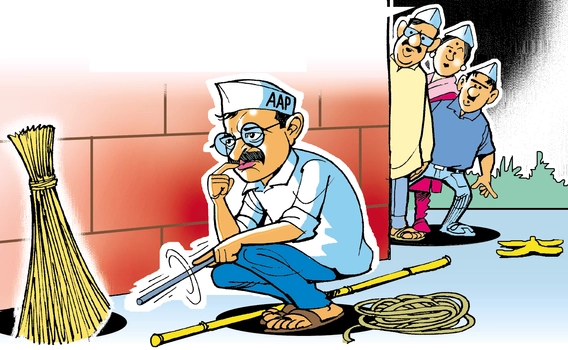
End Of The Road For Kejariwal?


The Delhi assembly elections concluded a couple of days ago, and the exit polls released yesterday indicated a stunning defeat for the Aam Aadmi Party. In recent years, exit polls have frequently provided inaccurate predictions. A notable example is the last Lok Sabha general elections, where it was widely assumed that the BJP would secure at least 320 seats, but the party ended up with only 240 seats, which was a significant disappointment. It is possible that the exit polls are also mispredicting the results of the Delhi assembly elections. Perhaps the exit polls are also mispredicting Delhi assembly results. 

As we keep a close eye on the election canvassing, we see some intriguing developments that could pose challenges for AAP. It’s important to note that both the party and Arvind Kejriwal have had a compelling rise, largely thanks to media coverage that painted them as champions of the common man. Kejriwal emerged as a figure of hope for many, a refreshing change in a political landscape often marred by corruption. He skillfully navigated the complexities of politics, gaining significant popularity along the way.

However, it seems Kejriwal may have misjudged the voters' perceptions. People are sharp and can see beyond the surface—many have sensed a shift from the idealism that once defined him to a more conventional, power-driven approach. Nonetheless, voters still showed their support during the assembly elections for several reasons. The Congress party’s tarnished reputation created a yearning for change, and the BJP wasn’t able to present a strong contender to challenge Kejriwal's position.

This situation opened a door for new possibilities. Voters were eager to embrace an innovative force, hoping for improvement. Unfortunately, rather than truly reading the room, Kejriwal may have let the adulation cloud his vision. While he certainly gained skills in political maneuvering, it’s crucial to remain grounded and connected to the people to sustain that trust and support. 

The Aam Aadmi Party (AAP) has consistently struggled to gain support beyond voters in Delhi and Punjab. While the party had a remarkable victory in Punjab, successfully taking the state from the Congress party, this was the peak of its achievements. Since then, the AAP has suffered defeats in three consecutive Lok Sabha elections and has not won a single Lok Sabha seat in Delhi, since its inception. This lack of success indicates a growing maturity and perceptiveness among voters. 

The cantankerous nature of the party and of Kejriwal may have finally become tiresome for the voters. His current incredulous promises likely sound hollow, and the circus shows he orchestrated during his arrest for corruption may have turned voters against him. It could also simply be a case of anti-incumbency. Regardless of the reason, it is evident that Kejriwal is not receiving the responses he was once accustomed to. This has made him desperate for new antics, such as accusing the Haryana government of poisoning the water supply. However, even that allegation has failed to generate any significant controversy. It seems that even his supporters in the media have abandoned him. Although the BJP has struggled to establish a coherent strategy in its Delhi unit over the past decade, they are likely to gain more seats simply because Kejriwal's dramatic antics are losing their charm.

Losing power in Delhi is simply not an option for Kejriwal. Without control over Delhi, he would feel like a fish out of water. Losing this position would immediately strip him of the media platform he currently wields. Moreover, if he loses Delhi, funding will dwindle. It's important to note that Kejriwal has already faced significant challenges, having spent months in jail despite being the Chief Minister. If he were to lose his position now, his situation would be even more precarious. As AAP navigates the political landscape with virtually no foothold in the Lok Sabha and solely in control of Punjab, it finds itself at a crucial crossroads that could define its very existence. Will they rise to the occasion, or is an existential crisis on the horizon?

I still expect the Aam Aadmi Party (AAP) to win the elections with a clear majority, despite the exit polls. The Bharatiya Janata Party (BJP) will also secure a substantial number of seats. As a result, the Delhi assembly will finally have a significant opposition presence. I feel positive about this outcome. It is about time that one of the most dishonest politicians and his disreputable party are shown their place. 

Friday, January 24, 2025

Mr. Manmohan Singh - Tale Of a 'Footnote'!


Recently, former Prime Minister of India, Shri Manmohan Singh, died of old age. Tributes poured in, hailing him as one of India's most extraordinary Prime Ministers. Albeit lower in the ranking than the Gandhi dynasty PMs! Mr. Singh, a Finance Minister in PM P.V. Narasimha Rao's government, is primarily credited for liberalizing India's economy in 1991. Fast forward a decade or so, and Mr. Singh was selected to be the Prime Minister of India in 2004 by his party's chief, Sonia Gandhi. Mr. Singh played that role for 10 years, presiding over some of the biggest scandals in post-independent India. Mr. Singh was not known to be loquacious, but he virtually turned mute in his second term. He refused to speak with the Press and forgot that it was his constitutional expectation to have a dialogue with his fellow citizens. Mr. Singh didn't even take the chance to call out his inept and corrupt ministers for their glaring incompetence and dishonesty. 

The country's economy stalled, and constant controversies completely paralyzed the decision-making in the government. It is hard to know why Mr. Singh did not take any steps to stop the scandals, fire the corrupt ministers, or attempt to make critical decisions. While his reputation as a noncorrupt PM remained unblemished, his reputation as a PM nose-dived. Mr. Singh's political masters refused to acknowledge the impact of Mr. Singh's meek leadership on India or the subsequent general election. The party got drubbing of historic proportion, and much of that blame lay at Mr. Singh's feet. After losing power, instead of graciously retiring, Mr. Singh remained an upper house member. Unsurprisingly, he continued to assail the next government on the key issues he would have championed in his days. 

Mr. Singh's political career is a story of prioritizing serving the Gandhi family above the country and presiding over some of the biggest scandals since India's independence. Back in 1991, a period when he did not directly serve Gandhi, he opened the Indian economy to the world. How much credit should we credit Mr. Singh for liberalization? Close reading of decision-making at that time will tell a different story. Mr. Singh did not want to or even championed liberalizing the economy. Multiple bad decisions successive Congress governments made in the past two decades finally caught up. India was about to face the harsh reality of economic pain and depredation. To stave off that scenario, Mr. Singh and his finance ministry decided to open up the Indian economy. It is worth noting that by design or sheer happenstance, Mr. Singh's tenure as a finance minister also saw some of the biggest financial scandals of those days. Presiding over scandals while continuing to showcase how he is the Saint of Uncorrupt is the game Mr. mastered during his term as the Prime Minister. We can argue that, during his period as PM of India, his absolute and utmost deference to Sonia Gandhi borders slave mentality. 

Mr. Singh did not understand that he expected to govern and serve the people of India. Instead, he thought that his priority was to serve Sonia Gandhi. At least by one account, he always said that 'there cannot be two power centers.' He was correct, but being PM meant he was to be the power center and not Sonia Gandhi. As his premiership descended into chaos, his legacy lurched from one scandal into another. But then, what else can be expected from a person who is 'selected' to be the PM? The people of India did not elect him; why would he worry about serving them? One glaring example that encapsulates his governance is his meekly surrendering his constitutional authority and responsibility to NAC -  National Advisory Committee- a non-elected, non-governmental, and non-constitutional authority run by Sonia Gandhi that essentially took decisions on behalf of the government. This sort of set-up was not only an affront to Indian democracy, but it was unconstitutional. Yet. Mr. Singh remained quiet. Maybe his sole hope lay in receiving a grand state farewell as he embarked on his next journey: something that eluded his former boss and our former PM, Mr. Narasimha Rao. 

Not many people get the opportunity to lead a country. Mr. Singh had that opportunity not once but twice. Instead of using his intelligence to improve the nation and benefit his fellow citizens, he leaves behind no meaningful legacy. History will not need to be kind to him; he will merely be a footnote!

Thursday, December 12, 2024

The Fall of Assad's


The fall of the Assad regime in Syria was spectacular and unexpected. At least, regular schmucks like me did not see it coming. One reason is that they had been fighting the civil war successfully for more than a decade, and second, in the ongoing Israel-Palestine conflict, Syria was not on anyone's radar. But how the regime crumbled showed how ephemeral these propped-up regimes are. It's hard to know who is propping them up and to what extent. But once that support evaporates, these regimes go poof! 

The general commentary on the ongoing Israel-Palestine conflict veers between banal and stupid. There is outrage over the Palestinian deaths, denial over the crime Hamas perpetrated, and then pontification over how Israel cannot solve this problem through warfare. The reality is that the Oct 7 attack by Hamas is going alter the future and geography of the Middle East for the foreseeable future. The ball game has changed for good. It is no longer the old conflict of cat-and-mouse that Israeli forces played with Hamas and Hezbollah. It is no longer a conflict where the Israeli army attempts to minimize civilian casualties; all the while, Hamas/Hezbollah maximizes the casualties for more funding and PR. It is hard to figure out the approximate civilian casualties in Palestine, Lebanon, and Syria, but suffice it to say that it runs into tens of thousands of innocent lives. That's tens of thousands more than needed. And yet, Hamas is refusing to release the hostages, and none of the world powers or Arab powers can force Hamas's hand. And the innocents are paying a heavy price for that. 

In response, the Israeli army has decided to take a no-holds-barred approach. They not only became purposefully indiscriminate in unleashing violence, but they spread the theater much more expansive than anyone could probably have predicted. Israeli army first dismantled Hamas in Gaza and Palestine. Then they moved on to Hezbollah. For both of these terrorist organizations, Israelis not only went after their ground network but also picked the senior leadership apart - one by one. The fury was staggeringly violent, but the precision in killing both Hamas and Hezbollah leadership stood unprecedented. Then, the war theater expanded into Lebanon and Syria. In the meantime, Israel and the U.S. Navy started tightening bolts around Iran in the Gulf of Hormuz. It seems like both Israel and the U.S. are hell-bent on making Iran pay the ultimate price for the horrendous attacks of Oct 7. The current conflict is no longer a battle with proxies; those proxies are about to be eliminated. But this is about going after the sponsors who pretend to be warriors while sitting comfortably in their houses. 

Assads have been playing the proxy game of Iran for a long time. With Iran increasingly finding itself in a tight spot, the Assads were on thin ice already. The Assads thought they were being clever by also becoming a proxy of Russia. But with Russia embattled in Ukraine, Assad's hold on Syria was a lot more tenuous than what appeared. The U.S. stuck at this weak moment by covertly funding and providing for the rebels fighting against the Assads. The Israelis were also waiting to pounce once the rebels moved it. It was like a perfect storm, except Assads had no shelter to run to. 

What is next for Syria? It's hard to predict, especially since no one expected the last few weeks. However, it is doubtful that Syria will have a calm future. The rebels will not be able to govern. Being a rebel is without any responsibilities, while governing is only that. The U.S. and Israel are not going to let the region fall prey to Iran's influence again. The country will either be divided, officially, into smaller countries. Even if it's not official, the government will be 'governed by various rebel factions. Turkey, Jordan, and Iraq will try to gain some influence to shore up their borders. The U.S. and Israel will be watching the grounds like hawks. The state-sponsored violence of Assad's will subside, but the region will not be peaceful for a long, long time! 

Thursday, November 28, 2024

The 'Un-rise' of Kamala!

The US elections recently concluded, not with the excitement that many expected but rather with a subdued outcome. There was considerable buzz surrounding Kamala Harris's candidacy. Although she was not initially seen as a strong contender against Trump, many self-proclaimed liberals had already declared her the future President of the United States. However, simply offering "thoughts and prayers" does not translate into votes, nor does a strong dislike for the opponent guarantee victory. Winning an election requires a concrete agenda and a clear vision, along with a well-defined plan to achieve it. All of this hinges on having a leader who is an effective communicator. A successful leader must understand the public's sentiments and possess the language skills necessary to resonate with the intended audience.

This is not to say that Trump possesses all of the qualities mentioned above. His vision is dark, filled with retribution and conflict, and often feels unattainable. In contrast to Kamala Harris, Trump presented an agenda, albeit a vulgar one. He did offer a vision. Most importantly, he expressed his thoughts assertively, even when he was politically incorrect or simply wrong.

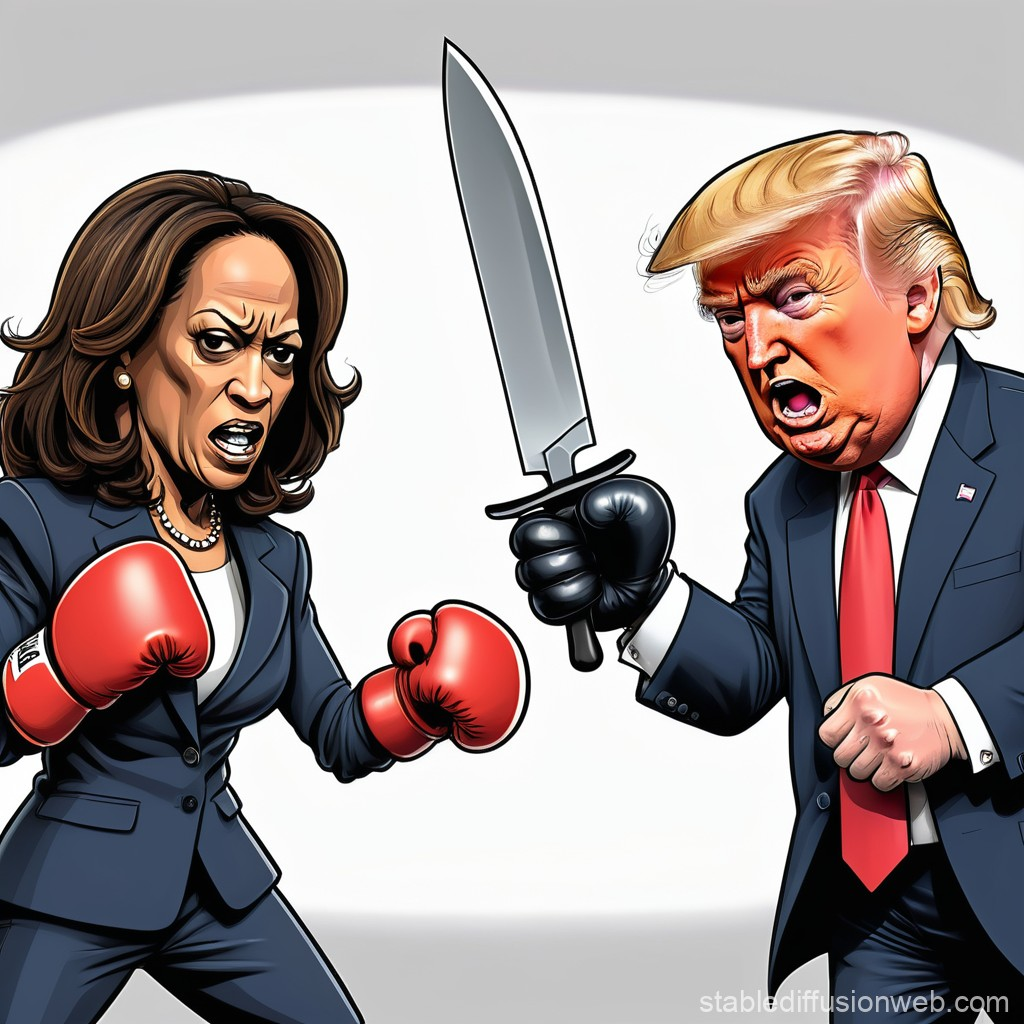
Kamala Harris, on the other hand, frequently changed her stance on significant issues, adapting her positions depending on the crowd and the problem at hand. The agenda of Kamala Harris and her Democratic party primarily focused on ensuring that Trump was not elected. While fear can be an effective political tactic, it has its limits. Fear alone cannot conceal a lack of political acumen, charisma, a coherent agenda, and effective strategy. The rallies and messaging seemed so heavily focused on Trump that I wondered if the Democrats were inadvertently campaigning for him.

One more poignant aspect that came out of the election is, the American electorate is not ready to elect a woman as President of the country. There needs to be greater maturity when it comes to electing a candidate of color or one with foreign ancestry, especially if that ancestry is from just one generation ago. Whether it is a coincidence or a repurcussion but election of President Obama seems to have directly led to the rise of Trump. 

We can discuss how unfortunate this is and explore potential solutions, but the fact remains that the Democratic Party did not adequately consider the implications of nominating a candidate with electoral shortcomings. If Donald Trump is indeed a poor choice—and many believe he will prove to be—then it would be wiser to support a candidate who has a legitimate chance of winning rather than forcing a social agenda as a political strategy. Ultimately, voters are likely choosing what they perceive as the lesser of two evils.

Overall, it’s a troubling situation for everyone, and the consequences will be felt by all.

Saturday, October 12, 2024

Haryana Elections Surprise!

The Haryana elections have been a great surprise to the most. My predication was, BJP would lose by a small margin. They would win enough seats to hold their ground but need to win more to form the government. But BJP leadership and strategists had other plans! When they smelled defeat, they hunkered down and got busy making rapid changes. First, they removed the Chief Minister of more than 9 years and replaced him with a relatively new face. The easy transition between Chief Ministers starkly contrasts with dynastic, 'Jaagirdaari' types in-fighting in Congress whenever there is a change. Second, the BJP implemented a time-tested strategy of overhauling the existing power structure. In 2013, Shivraj Singh Chauhan, incumbent CM of Madhya Pradesh, did not give tickets to more than two-thirds of sitting MLAs. A bold strategy that paid spectacularly as he returned to power with an overwhelming majority- adding 22 more seats than his prior term. BJP similarly gave tickets to only a few sitting MLAs. This led to discontent in the ranks. There were rebellions and party changes. But the party and the leadership stayed put. What was there to lose anyway? Third and last, they made the election local - no longer the Modi election engine. Modi ji played his role and campaigned, but the state-level elections remained state-level. The door-to-door campaign and booth management have always been BJP's fortress, and it was on full display! 

However, the BJP's victory in the Haryana elections was not just a good showing but a historic win. In 2014, when BJP first won the majority, they secured 47 out of 90 seats. This time, when they were expected to face a massive defeat, the party held their ground and won 48 seats, their best-ever electoral showing in the state. The math behind this victory can be explained, but what about the voter sentiments that drove such a significant shift? What factors led to this landslide victory?

The Congress party and the other so-called opposition were riding high, understandably so, after sudden gains they achieved during the May general elections. However, they thought they won more seats because of issues they raised, which is not valid. They have yet to come up with better solutions than what the current dispensation has in place. They did not have any fresh ideas either. In the name of electoral strategy, all they had was scaremongering, rumor-mongering, and archaic ideas of social justice that the majority of the upward-moving Indians do not identify with. The scare tactics about the Indian Constitution being in danger did work to an extent. Still, incumbency played an equal or more role in giving a jolt to the BJP in the general elections. Unfortunately, Congress, one of the only main opposition parties in Haryana, stuck to the old formula. They raised false alarms over social justice and outsourced the outrage industry to a third party (the Wrestlers, in this case).

To make matters worse, they made critical mistakes in the caste equation. BJP has been constantly creating a new flank to oppose the dominant caste in every election. In Haryana, the BJP, in the past,  managed to unite the non-Jat castes. The Congress party attempted to counter this by adding Selja Kumari to the state leadership. But that backfired spectacularly since the former CM was in no mood to surrender his position of power. That impacted the voting pattern since the non-Jat voters may have decided to stick with the BJP. 

The last but essential development often overlooked is the Hindu vote bank consolidation. It has been happening regularly since 2014. The vote consolidation did happen in Haryana as well. There is no metric to calculate that since the Hindu votes do get divided along the caste lines. But constant disparaging of Hindu sentiments by the Congress and other Opposition parties has been building a silent wave of antipathy towards them. If the BJP plays the cards right, they are likely to win in the upcoming Maharashtra and Jharkhand elections. 

Monday, September 23, 2024

The Ripple Effects of General Elections

The current political situation in India is a fascinating puzzle, with the aftermath of the General Elections still unfolding. Not all critical political players have grasped the full implications of the results, and the election threw the wildest possible scenario. The opposition parties, after a long struggle, finally managed to land a punch on BJP's formidable election machinery. The disruptive force of the Modi factor in Indian politics has been a unique phenomenon. Since 2014, every election at every level in every corner of the country has become a referendum on Modi Ji.  The Opposition, at first, could not comprehend this unique situation, and then, they could not counter it effectively. The political discourse of Hindutva, coupled with rapid economic growth ushered by the Modi government, was a potent force.

The narrative took an unexpected turn when the Opposition, especially the Congress party, stumbled upon a counter-narrative - that the BJP is planning to change the Constitution and do away with the reservations. By sheer chance, this canary of lies hit the chord. Apart from this new election strategy, Modi Ji and BJP were already fighting apparent voter fatigue and anti-incumbency. The Opposition played the narrative that the Modi government plans to tinker with the Constitution, again and again, once the Opposition realized there was an audience for this story. This strategy was not a knock-out punch; it would never be one. However, it did bring the BJP down from the heady clouds. The seat drop, especially in Uttar Pradesh, will undoubtedly slow down the BJP's march shortly.  

But does that mean the halo of Modi ji has dimmed? I don't think so. His popularity is increasing. Modi Ji joined the hallowed chamber with only two occupants - our first PM, Jawaharlal Nehru, and then Indira Gandhi. These two Prime Ministers also continue to generate respect across the voting patterns. However, Shri Nehru's popularity has been waning lately, Smt. Indira Gandhi's popularity among the masses is still high. Similarly, Modi Ji continues to be widespread across the party lines. His clean image, work ethic, and ability to connect with the masses remain unparalleled in the current political situation. 

However, will that popularity translate into more and more votes? That is to be seen in some of the upcoming elections. BJP is grappling with 'grown-up' issues. Growing rapidly is fun, but maintaining the lead is a onerous task. The strategy needs to constantly be agile. And most importantly, the ideology also needs to constantly shift. No one can claim to be a true ideologue in politics. But BJP does hold on to its founding ideology to a large extent. And that's where they are likely to problems. The people that shouldn't be in the party are being added because they can potentially win the election. While the people who built the party or are core ideologues are being sidelined so the party can potentially win the elections. This is bound to happen for any political organization. I hope BJP sticks to the ideology and does not get carried away to win elections at any cost. I hope the party sticks with home-grown, in-house cadre instead of relying on 'imports'. I hope the party gives free hand to Yogi Adityanath and not fall prey to internal politicsl.  I am curious to see how the BJP manages this situation. 

They are still the best and, for most purposes, the only political party that works towards the development of the country. If the party mismanages this rapid rise and the issues it brings, then the country will pay the heavy price. 


Saturday, August 17, 2024

The Kamala Effect In The White House!

The current US Presidential race has been a wild affair so far. It is such a rollercoaster ride that even the astute political pundits feel dizzy. To start with, you have the dramatic comeback of Donald Trump. Buried and thought to be left for dead under multiple fraud investigations, no one saw him demolishing opposition within his part to win the Presidential nomination. The fact that he is a convicted felon mattered to literally no one. Presidential races are ultimately popularity contests. And Trump knows how to remain popular! Trump entered the race against an incumbent President with such force that his winning the election almost felt like a foregone conclusion. The deteriorating faculties of the incumbent President Biden were often at the crossroads with his ambition. That played very well in Trump's campaign. The first televised debate was a disaster for President Biden. The incoherence, the stumbling, the mumblings were a cringe of epic proportion. Trump got an opportunity to debate with himself, and he did well.

As if that was not enough, Trump was (slightly off) the center of a deplorable attempt on his life. Violence or assassinations have no place in a civil society. However, Trump's campaign just hit another jackpot with the failed assassination attempt. This event not only bolstered Trump's image as a resilient leader but also significantly increased his campaign funds for the 2024 election (that he is accused and convicted of using for his gains in the last election campaign). Trump's campaign was probably hiring an interior decorator to redesign the white house Presidential bedroom! 

There is a reason political drama is hard to predict. It's a classic butterfly effect. As Trump, in his mind, was readying himself to ascend the throne, he overplayed his hand. The debacle of the televised debate forced the opposition to take drastic measures. In an unprecedented move, the Democratic Party forced the incumbent President to resign from running again. As if that was not enough, the Party decided to punt wild and nominated a woman with mixed racial background, Kamala Harris. This decision was a strategic move to appeal to a broader voter base and to provide a fresh perspective in the race. Initial reactions to Kamala Harris's nomination were decidedly mixed. The last time Americans had a choice of electing a woman President, they elected Trump! Will the history repeat itself? Perhaps. However, to everyone's surprise, Kamala Harris's campaign is progressing. Undecided voters are leaning towards voting for Harris. These undecided voters hated Trump, but they hated Biden more. Kamala Harris's candidacy provided these undecided voters an honorable way out; now they are banding together behind her. Trump and his campaign managers did not see this coming. They are found completely flat-footed. Trump is panicking, and instead of adjusting, continuing with his old strategy of personally attacking his opposition, constantly lying on everything, and, instead of any sensible policy, blabbering randomly on random matters. The only difference between President Biden's and Trump's incoherence is Trump sounds very confident! 

You can fool some people sometimes, you can fool all the people one time, but you cannot fool all the people all the time! Trump is likely to find that out the hard way in November. His rabble-rousing has aroused the apathetic voters, who will likely come out en masse to vote against him! 

The rapid shifts in political fortunes are a testament to the unpredictable nature of the US Presidential race. The old adage of 'it's not done till it's done' holds true, and with a month and a half left until the elections, the potential outcomes are significant. While things can still change, for now, it seems Kamala Harris's candidacy is on the brink of a significant development in the White House. 

Tuesday, July 30, 2024

Congress - What's Next?

Lies and rumor-mongering. That is the newest strategy of the Congress party, particularly Rahul Gandhi. The party has recently faired much better than most expected in the recent election. Buoyed by the success, the voters will likely believe that the Party and Rahul Gandhi will raise real issues like taxation or inflation. Instead, we are witnessing Rahul Gandhi lying through his teeth in the Parliament on issues such as the Agniveer program. And instead of cornering the government on taxation, doing imbecile acts like walking across to shake hands with the PM and hug him. After this juvenile show, Rahul Gandhi lied some more, like calling out the situation of Locomotive Pilots of trains when all parameters showed that the problem of these train drivers had improved in the last ten years. No mainstream press or journalist is asking Rahul counter-questions. Perhaps Rahul needs to let them ask questions. He and the party have assumed the role of a guerilla terrorist - attacking and then scuttling to the dark and putrid corners. 

The strategy of 'lying first, second, and third' is familiar. It is one of the oldest tricks in any political book. Donald Trump has been using it to great success. Perhaps, Rahul realized that, and now he is trying to assume the Trumpian avatar. Trying to become Trump of India. He has learned from his past mistakes and lies only in the Parliament. Rahul was disqualified from his parliamentary seat and humbled by the justice system for publicly lying. Instead of learning from this and being more responsible with his words and actions, he changed the venue of spreading false information. What is said in Parliament is fully protected; no one can file a libel case based on parliamentary speech. That is the reason Kejariwal goes on a rampage in the Delhi assembly: he knows he is untouchable there. Rahul followed Kejariwal in this aspect. Of course, Rahul has ways to go before he can compete with Kejariwal. No one lies like Kejariwal. No one!

Do Indian people deserve Rahul Gandhi? Certainly not. An overwhelming majority of Indians work very hard to earn their living. They face the consequences if they don't perform in their jobs. They behave responsibly and maturely, unlike Rahul Gandhi who has never faced consequence for his actions. It is unlikely he will face any backlash in the future. Mockery, yes! But he is never going to lose his stronghold over the grand old party. He will always have servents waiting to serve him, no matter the job. Quite a position he has, in stark contrast to the hardworking Indian people, who deserve better than a leader who evades responsibility. 

He also doesn't have to pay taxes. By the way, has he ever had a real job to earn his living? 

Having no opposition is not good for democracy. Having Rahul Gandhi and the Congress party as an opposition is far worse. They will not think twice before putting the country in danger, driven by their lust for power. Take the example of Jairam Ramesh. This man has not won a single vote in his name, yet he caused havoc in the economy through his environmental terrorism activism. And the moment this person sees some sunshine, he has gone after the Nicobar island project - a strategically important initiative needed for India's maritime security in the Indian ocean. Perhaps, Ramesh has received his Yens recently! Their actions are not just a threat to the government but to the entire nation, a fact that should deeply concern every Indian. 

It will be interesting to see how Modi Ji and his government manage the next few years. Despite the Modi government's tax on terrorism, this government is still the best bet for India's future. I hope Rahul Gandhi and his servant party lose steam barking and, most importantly, come to the next election; better sense prevails for Indian voters. Under the leadership of Modi Ji, there is hope for a brighter future for India.